
News
How AI-Powered Soil Sensors Are Saving Farmers Thousands in Fertilizer Costs
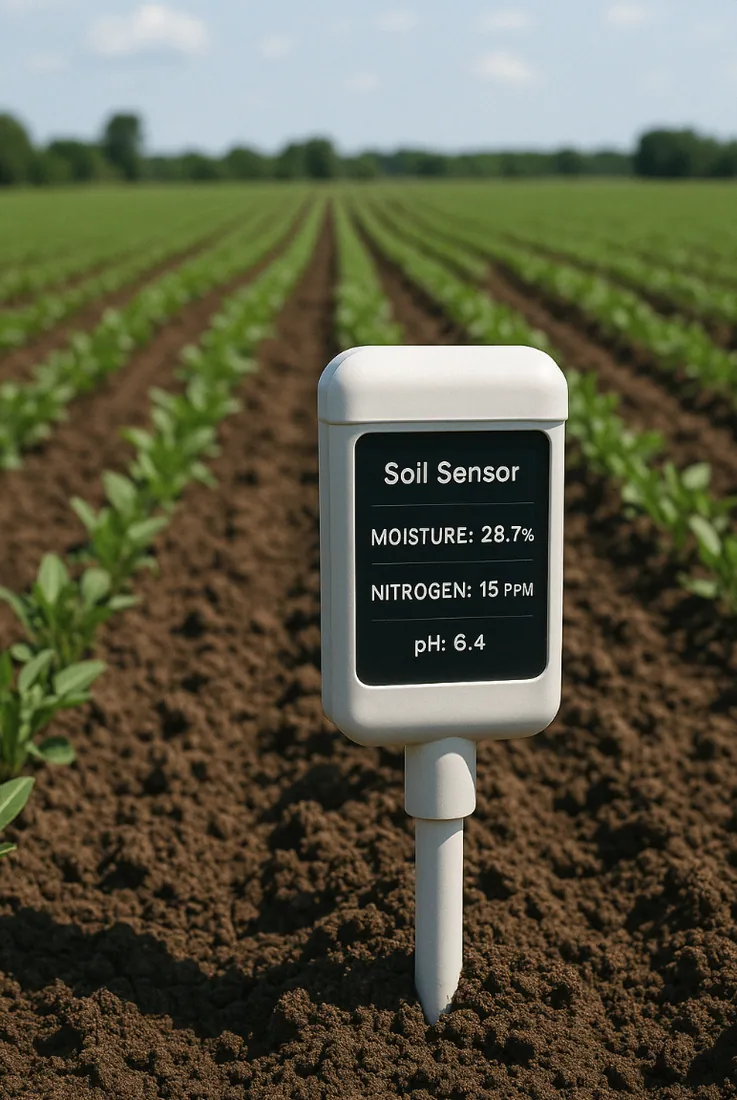
In a world grappling with climate change, rising input costs, and a growing demand for sustainable practices, agriculture is undergoing a profound transformation. Among the most promising innovations is the rise of AI-powered soil sensors—small, unobtrusive devices that are quietly revolutionizing how farmers manage their land, their crops, and their expenses.
This is not just about smart farming; this is about survival, efficiency, and profitability in the 21st century.
### From Guesswork to Precision
Traditional farming, even when guided by experience and intuition, has long relied on averages and assumptions. Fertilizer applications, for instance, are often determined based on generalized guidelines or past practices. This leads to overuse in some areas, under-use in others, and massive inefficiencies across the board.
Enter AI-powered soil sensors. These devices are embedded in the ground to collect real-time data on key variables: moisture levels, pH, temperature, nutrient concentrations, and microbial activity. The data is transmitted to cloud-based platforms where AI algorithms analyze patterns, predict plant needs, and offer hyper-localized recommendations.
Instead of treating a 100-hectare field as one uniform plot, farmers can now treat it as hundreds of microzones, each with its own unique profile.
### The Economic Argument
The economic impact of this technology is hard to overstate. Fertilizer is one of the most expensive inputs in agriculture, and prices have surged in recent years due to global supply chain disruptions and energy costs. AI-enabled soil monitoring helps farmers apply the right amount of fertilizer only where and when it's needed.
Take, for example, a large-scale corn farm in Iowa. Prior to deploying soil sensors, the farm applied fertilizer evenly across its acreage. With sensors in place, the farmer discovered that 35% of the land was already nutrient-rich and required no additional fertilization. This insight alone translated into savings of $62,000 in a single season—not to mention the environmental benefits of reducing runoff into local water supplies.
### Better Yields, Healthier Soil
Beyond immediate cost savings, AI-driven precision fertilization has a long-term benefit: soil health. Over-application of fertilizers can degrade soil microbiomes, leading to diminishing returns and long-term fertility loss. By tailoring applications, farmers not only save money but preserve the biological integrity of their land.
In wine-producing regions of France, for instance, vintners are using these sensors not just to manage yields but to fine-tune the expression of terroir—adjusting inputs to maintain the balance that defines their wines’ character. In such cases, the return on investment is not only financial but also deeply cultural.
### Real-Time Decision Making
One of the most powerful advantages of AI is its ability to respond to change in real time. Traditional soil tests can take days to return results, and by the time they do, weather conditions or plant needs may have shifted. AI-powered sensors operate continuously, allowing farmers to adjust their fertilization strategy on the fly.
During the 2022 growing season in Brazil, a soybean cooperative equipped with AI sensors was able to pivot its strategy mid-season in response to unseasonal rainfall. The sensors flagged leaching of key nutrients, prompting a targeted reapplication that salvaged what could have been a disastrous yield.
### Democratizing Data
Perhaps most exciting is the accessibility of this technology. What was once the domain of large-scale industrial farms is now available to mid-sized and even smallholder farmers. Companies are offering modular sensor systems that can be scaled to the size and needs of any farm. And thanks to mobile apps, farmers can receive recommendations directly on their smartphones.
In India, a government-backed initiative has provided AI soil kits to over 25,000 farmers across Maharashtra. Early reports show an average reduction of 18% in fertilizer usage and a 12% increase in yields.
### Challenges and the Road Ahead
Of course, no technology is without its hurdles. AI soil sensors require upfront investment, reliable connectivity, and a degree of digital literacy. There is also the challenge of interpreting data correctly—especially for farmers who are new to such systems.
To address this, some startups are pairing their technology with agronomist support, offering hybrid models where AI recommendations are reviewed and customized by local experts. Others are working on integrating sensor data with drone imagery, satellite feeds, and weather models to create an even more comprehensive picture.
### A Smarter, Greener Future
What AI-powered soil sensors represent is not just a cost-cutting tool, but a paradigm shift. They allow agriculture to become more data-driven, environmentally responsible, and resilient.
As climate volatility increases and the pressure to feed a growing population intensifies, such innovations may well determine who thrives in tomorrow’s agricultural economy. From the vineyards of Bordeaux to the rice paddies of Southeast Asia, these sensors are already proving their worth.
And perhaps the greatest promise lies in what comes next—when these intelligent systems begin to learn not just from one farm, but from thousands. When the collective wisdom of global agriculture is distilled into real-time decisions made in the soil beneath our feet.